


Sweden's National Day is 6 June, but Midsummer is when Swedes truly celebrate. In 2024, Midsummer Eve falls on 21 June but in many places, festivities are held during the whole Midsummer weekend. Welcome to join the celebration!
The Midsummer night is filled with magic
The Christian tradition of celebrating the prophet St. John the Baptist coincides with the summer solstice. In Northern Europe, the date is still celebrated with the lighting of bonfires and festivities.
From the late Middle Ages, Swedes began raising and dancing around a Midsummer pole. Decorating it with flowers and greenery is called 'maja', so it is also known as a maypole.
In the agrarian society, the Midsummer night was considered a time of magic and mystery when plants acquired healing powers and were used to predict the future. Young women would pick seven different kinds of flowers and put them under their pillow to dream of their future husbands. The flowers must be picked in silence, or the magic would be broken. Regardless of gender and norms, those feeling curious and intrigued should probably take a chance on this Midsummer magic, it might just work.
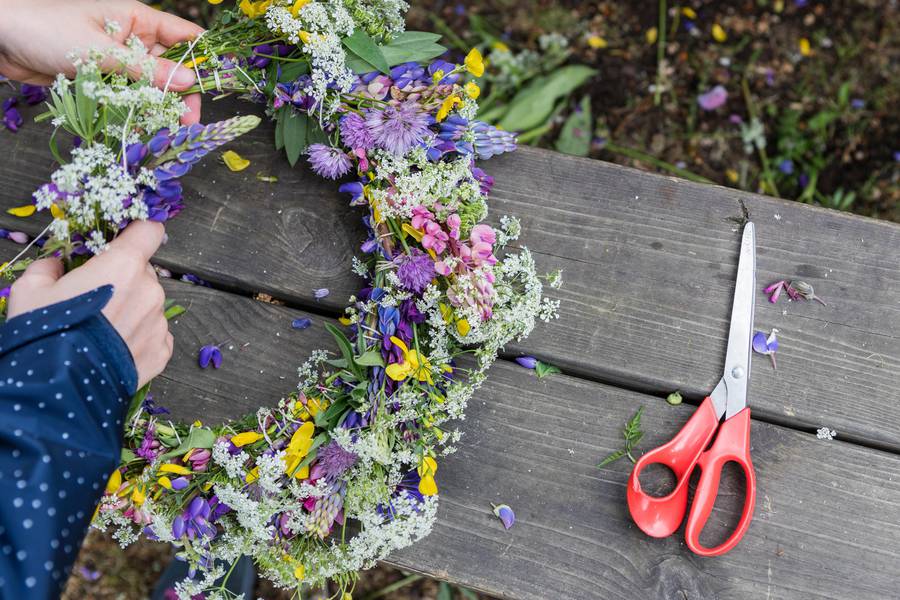
Walking barefoot in the dew as the Midsummer night turned to dawn helped you stay healthy. Wearing a wreath of flowers in your hair is an old symbol of rebirth and fertility. To preserve the flowers' magic throughout the year, bouquets were dried and sometimes placed in the Christmas bath to keep the family healthy through the long, cold winter.
Today, Midsummer is about celebrating that the best time of the year lies ahead of us.

Pickled herring, fresh potatoes and strawberries
Like all major holidays, Midsummer revolves around eating and drinking. The Midsummer fare boils down to a few musts: fresh potatoes, pickled herring, Aquavit or 'snaps' and strawberries. When combined, they will give you the taste of real Swedish summer.
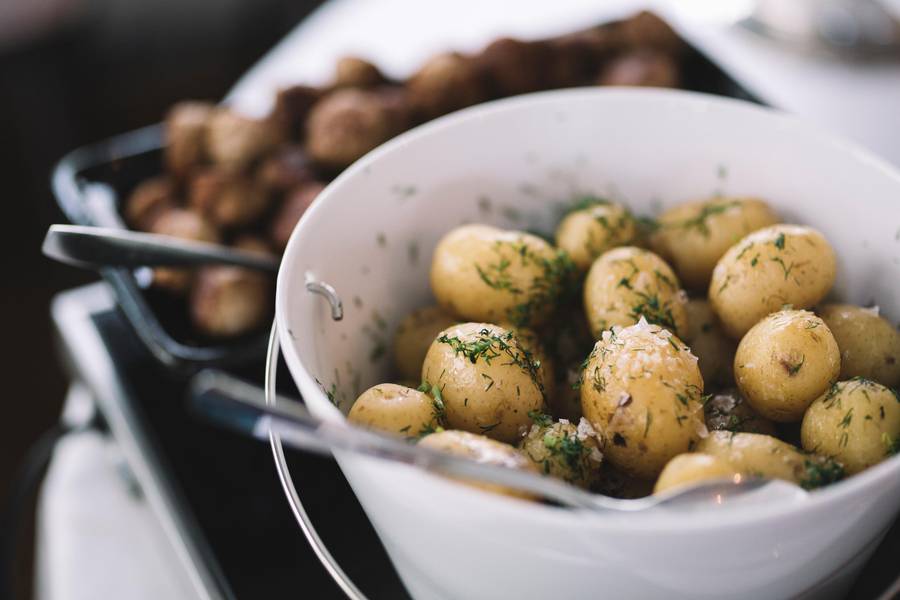
Potatoes came to Sweden in the mid-1650s, but it took a hundred years before they were planted, harvested and eaten on a larger scale around the country. At Midsummer, fresh new potatoes aka 'färskpotatis' cooked with dill are a must. Small, and with thin skin that is gently scrubbed, they make lovely companions with pickled herring, gravlax and Swedish meatballs.
The traditional food served at Midsummer is part of the Swedish smorgasbord that Swedes also enjoy during Easter and Christmas. It developed during the 1800s and stems from the 'brännvinsbord' that was served as a starter, consisting of bread, butter, cheese, salmon, anchovy or pickled herring, sausages, dried meat and three kinds of 'brännvin' aka Aquavit. An old-fashioned 'brännvinsbord' can be seen at the Nordic Museum in Stockholm, which has several traditional table settings on display.
Drinking songs are unique to Sweden
A vital part of enjoying Aquavit is the toasting and singing. For each toast, a new song is sung. The most popular drinking song is 'Helan går'. The name meaning 'the whole goes (down)' refers to the drink being the first in a series of 'snaps'. If you don't drink the first one, you can't have the second, called 'Halvan' meaning 'the half'.
Drinking songs are unique to Sweden (and the Swedish-speaking parts of Finland) and new ones are composed by using known melodies and making up lyrics. The Museum of Spirits in Stockholm has collected more than 12,000 drinking songs. If you were to sing one drinking song every day, they would last more than 32 years!
The meal is finished off with fresh strawberries served with whipped cream. Any Swede will tell you that Swedish strawberries are the best, and they may be right. Due to the long, bright and cool spring nights Swedish strawberries don't burn their sugar as quickly, making them sweeter. You can also enjoy them in a classic strawberry cake aka 'jordgubbstårta'.
Kubb, femkamp and other fun games
Having enjoyed all that lovely Midsummer food, it is time to play some games. At Midsummer parties, it's ok to be a bit whimsical and people of all ages participate. The different family games played at Midsummer are commonly called 'femkamp', often with a playful twist. Classic garden games like croquet and sack race are played and creative new games are made up.
A popular outdoor summer game for Swedes of all ages is 'kubb' where the objective is to knock down ten small wooden blocks ('kubb') and one large wooden block ('the king') by throwing wooden sticks.
'Kubb' is played in local parks and private gardens. Being so widely spread all over the country, there are many variants of the game and players have developed their own understanding of how to play it. Friendly arguments about the rules of kubb have almost become part of the game.
Now you are all set for midsummer!


