Separate from herding dog breeds, livestock guardian dogs have been watching over flocks for thousands of years.
Archeologists have found skeletons of livestock guardian dogs lying side-by-side with sheep and goats in sites dating back 6000 years. Their images appear in pictographs found in the ruins of Babylon and Nineveh in ancient Mesopotamia, and in third to second millennium B.C.E. petroglyphs in central Kazakhstan. They likely arrived in Europe with nomadic shepherds from the Caucasus in the 6th century B.C.E.
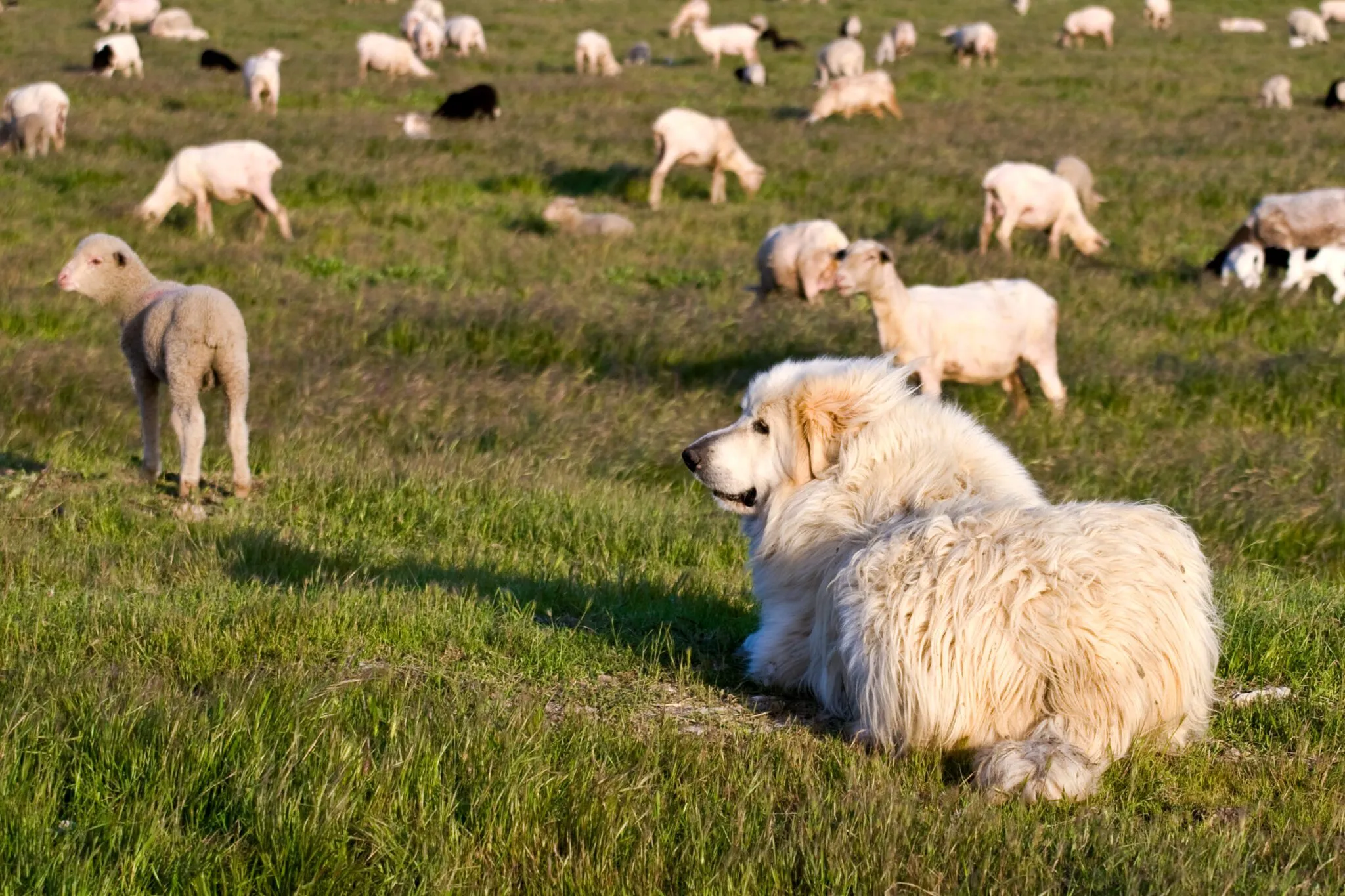
Livestock guardian dogs (LGDs) are an ancient class of dogs whose sole purpose is to guard livestock such as sheep and goats. (Livestock guardians are very different from herding dogs such as Border Collies and Australian Shepherds, which help herdsmen move their stock from place to place.) First brought to the U.S. by Spanish settlers in the 1500s, livestock guardian dogs were nevertheless virtually unknown by most American ranchers until the late 1970s. Since then, these dogs have become a staple for hundreds of ranchers throughout the country.
Characteristics of Livestock Guardian Dogs
ree crucial traits for any livestock guardian dog are:
Trustworthiness (not likely to roam, and not aggressive with livestock),
Attentiveness (situationally aware of threats)
Protectiveness (able to drive off predators)
Physically, LGDs are often in excess of two feet tall and upwards of 100 pounds with large, blocky heads, floppy ears, and water-resistant coats. Their coat color typically reflects not just their breed, but also the appearance of the animals that they guard: white dogs with white sheep, brown or grey dogs with dark-colored sheep or goats.
LGDs are usually introduced to their livestock as puppies-as young as 4 to 8 weeks of age. Because of this early bonding, the dogs are more likely to follow and protect the flock as if they were part of it. At one time, it was a widely-held belief that an LGD needed to be raised without human contact in order for them to form this bond. Yet historically, these dogs have always been part of traditional pastoralist families, and today's ranchers have come to understand that human socialization is vital during the bonding process, and an important part of a LGD's care and training.

Common Breeds Used as Livestock Guardian Dogs
Great Pyrenees
Akbash
Maremma
Anatolian Shepherd
Komondor
The Role of Livestock Guardian Dogs in the U.S.
Although a fairly recent addition to American ranches, LGDs have proven to be extremely effective deterrents to hunters like coyotes-which hold the distinction as being our most common sheep-killing predator-domestic dogs, mountain lions, bears, foxes, and bobcats. They've also shown themselves to an important part of alleviating conflict between livestock, which ranchers necessarily need to protect, and predators, many of which are themselves endangered or threatened species. LGDs also offer a way for ranchers and ecologists to coexist, providing humane alternatives to lethal control methods such as poisoning and shooting, while supporting biodiversity and conservation.