


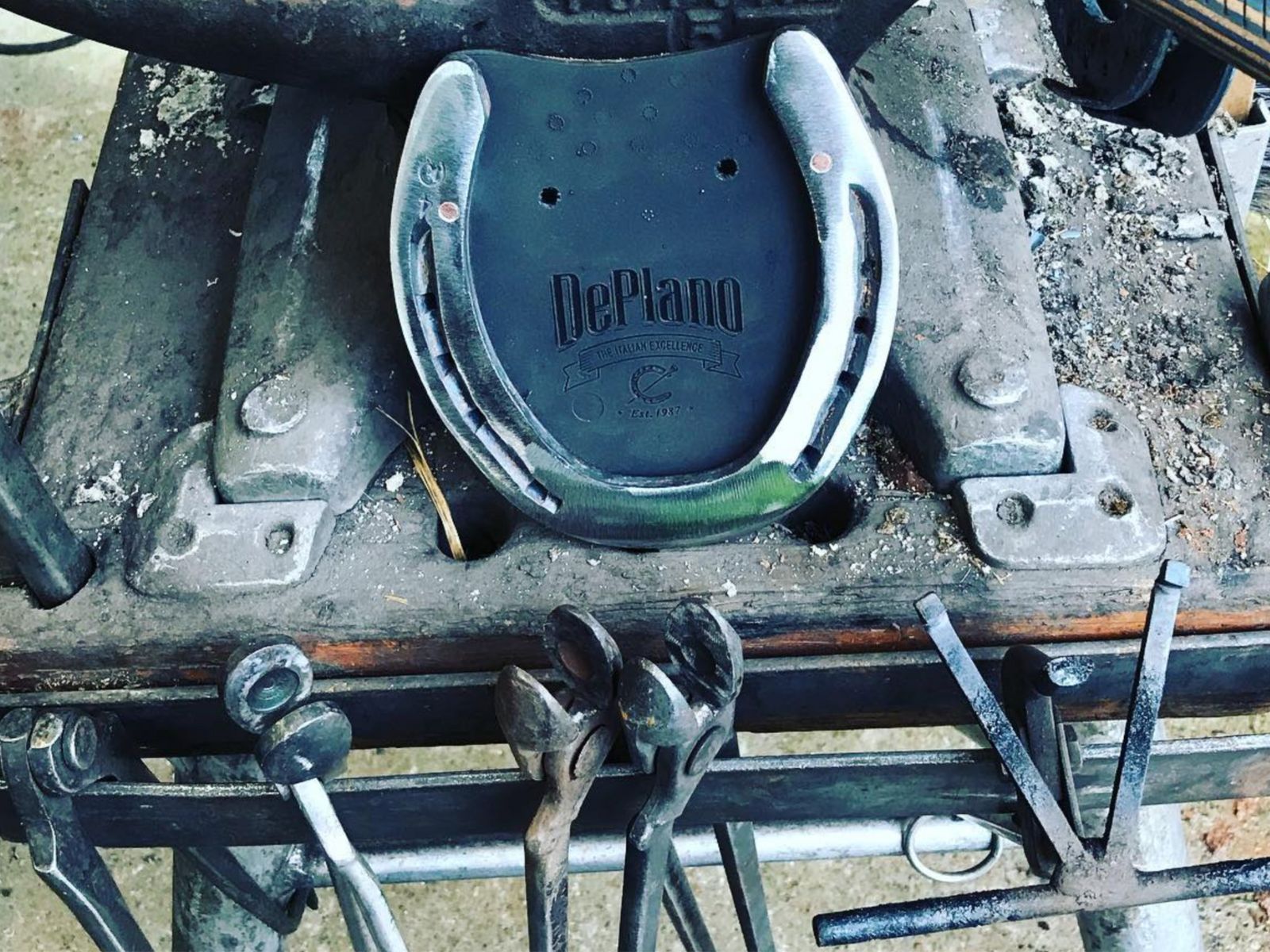
If you're a horse owner, you're likely pretty close with your farrier. When it comes to horse hooves, farriers know everything there is to know, from trimming hooves to fitting horseshoes and more. A farrier's experience and knowledge are invaluable, and though a great farrier will take the time to explain their methods and give advice, we know it can be tricky to keep all that information straight. In this guide, we'll look at the different types of horseshoes, what they're commonly used for, and the benefits that they provide to your horse so you can be in-the-know during your next farrier visit.
What is a horseshoe?
A horseshoe is a U-shaped metal plate specifically designed to be nailed to the hooves of horses and other working animals, such as mules and donkeys. Horseshoes are primarily used to protect the hooves of these animals and provide additional traction, particularly when used on hard or rough surfaces, like roads, pavements, or rocky terrain.
The practice of shoeing horses dates back to ancient times, and it remains a common practice in modern equestrian and working horse industries. The horseshoe is typically made of steel or aluminum, though historically, other materials like iron were used. The horseshoe's shape conforms to the natural curve of a horse's hoof and is designed to provide stability and protection, reducing the risk of wear, cracks, or injuries to the hooves.
Shoeing horses is usually performed by a professional farrier, who is skilled in fitting and applying horseshoes properly. The process involves cleaning and shaping the hoof, fitting the appropriate horseshoe, and then nailing it into the hoof wall.
Do all horses need horseshoes?
Not all horses need shoes. Horses that spend most of their time in soft, natural terrains, like grassy pastures, may not need horseshoes as their hooves tend to wear naturally. Wild horses, for example, don't wear horseshoes at all because their hooves are sturdy and adapt to their environment. However, horses that engage in activities like riding, racing, pulling heavy loads, or traversing harder surfaces usually benefit from the added protection and support provided by horseshoes.
Whether a horse requires horseshoes or not depends on several factors, including the horse's hoof health, conformation, and the type of work or activity they engage in. Let's look at some types of horses that would benefit from wearing horseshoes.
Riding and performance horses
Horses used for riding, jumping, racing, or other performance disciplines often wear horseshoes to provide additional support and protection to their hooves during strenuous activities.
Working horses
Horses used for pulling carts, plowing fields, or carrying heavy loads may require horseshoes to protect their hooves from the strain of these tasks and provide traction on hard surfaces.
Horses with hoof issues
Some horses may have hoof problems or conformational issues that make them more susceptible to injuries or excessive wear. Conditions like founder (laminitis), thrush, and white line disease all affect the integrity of the horse's hoof, making it difficult to walk normally. In such cases, a farrier may recommend using horseshoes to help manage these conditions.
Horses with therapeutic needs
Just like people, horses sometimes need orthopedic shoes. Conditions like navicular, ring bone, side bone, and even osteoarthritis can all affect your horse's hooves and joints. Many of these conditions are painful and can worsen over time. In certain therapeutic cases, specialized shoes or orthotics may be used to support and correct specific hoof conditions.
Learn more about horse hooves and other parts of a horse.
8 types of horseshoes
There are tons of different horseshoe options, each with its own set of benefits and uses. Here are some common horseshoe types.
1. Keg horseshoes
These are the most common type of U-shaped horseshoes, typically made of steel. A Keg horseshoe's simple U shape includes a center groove for the nails to be hammered into. Keg horseshoes are basic but durable and provide good support for horses engaged in a wide variety of activities.
2. Straight bar horseshoes
Bar shoes are fully enclosed compared to the U shape of classic horseshoes. Straight-bar shoes have a flat bar on the heel of the hoof that encloses the horseshoe. These horseshoes offer additional support and stability for hoof walls and are often used for horses with certain hoof issues or injuries.
3. Eggbar horseshoes
Eggbar shoes have a rounder shape that resembles an egg and have a curve instead of a straight bar against the heel. These horseshoes provide support to the back of the hoof and are commonly used to relieve pressure on the heels or support weak heels in horses.
4. Heart bar horseshoes
As the name suggests, heart bar horseshoes are heart-shaped and are primarily used in therapeutic situations or when a hoof injury has occurred. The extra section provides frog support for horses with laminitis and may also be supplemented with padding for added relief.
5. Racing plates
Racing plates are lightweight horseshoes typically made from aluminum. they help reduce weight while still providing some level of protection and traction for the horse. As the name suggests, racing plates are used for racehorses.
7. Studded or traction horseshoes
Also referred to as heel or toe caulks, these horseshoes have added studs or traction devices for better grip on slippery surfaces, such as ice or muddy terrain. Farriers typically add studs to the two back points of the horse's heel and sometimes the toe for added grip.
8. Glue-on horseshoes
Instead of traditional nailing, these horseshoes are glued directly to the hooves, offering an alternative for horses with certain hoof issues or when traditional nailing is not possible. Glue-on shoes are typically made of plastic or other material to allow the shoe to expand and contract naturally with the hoof.


